
Illinois DCFS Uses Augintel to Uncover Bias
The Office of Racial Equity Practice at DCFS could track investigations, placements, and permanency outcomes.
Learn how Maryland DHS uses AI to analyze the case notes their workforce was already writing →



Child welfare professionals dedicate their careers to keeping children and families safe. But in the demands of the job, their own safety can sometimes take a back seat. Violence against child welfare workers is an ongoing concern, and feeling safe in the workplace is critical not only to employee well-being but also to workforce retention.
The Capacity Building Center for States highlights the broader impact in its child welfare worker safety guide:
"In addition to the physical and emotional costs, violence against child welfare workers has been associated with significant direct and indirect costs for child welfare agencies, including increased medical expenses for victims, higher expenditures for mental health care services, lost productivity, low worker retention, and other costs (Kim & Hopkins, 2015)."
Worker safety is not simply an individual responsibility. Agencies need practical ways to identify potential risks and prepare staff before they enter the field.
As a former child welfare caseworker, I remember how much it meant when supervisors and coworkers reminded me to remain aware of my surroundings and consider my personal safety during home visits. Those reminders demonstrated that my safety mattered to the organization.
At Augintel, we're using technology to make that kind of support more proactive.
When a caseworker is assigned to a new family, reviewing the entire case history may not be realistic given existing caseloads and competing demands. Yet important information about potential safety concerns may be buried in years of documentation.
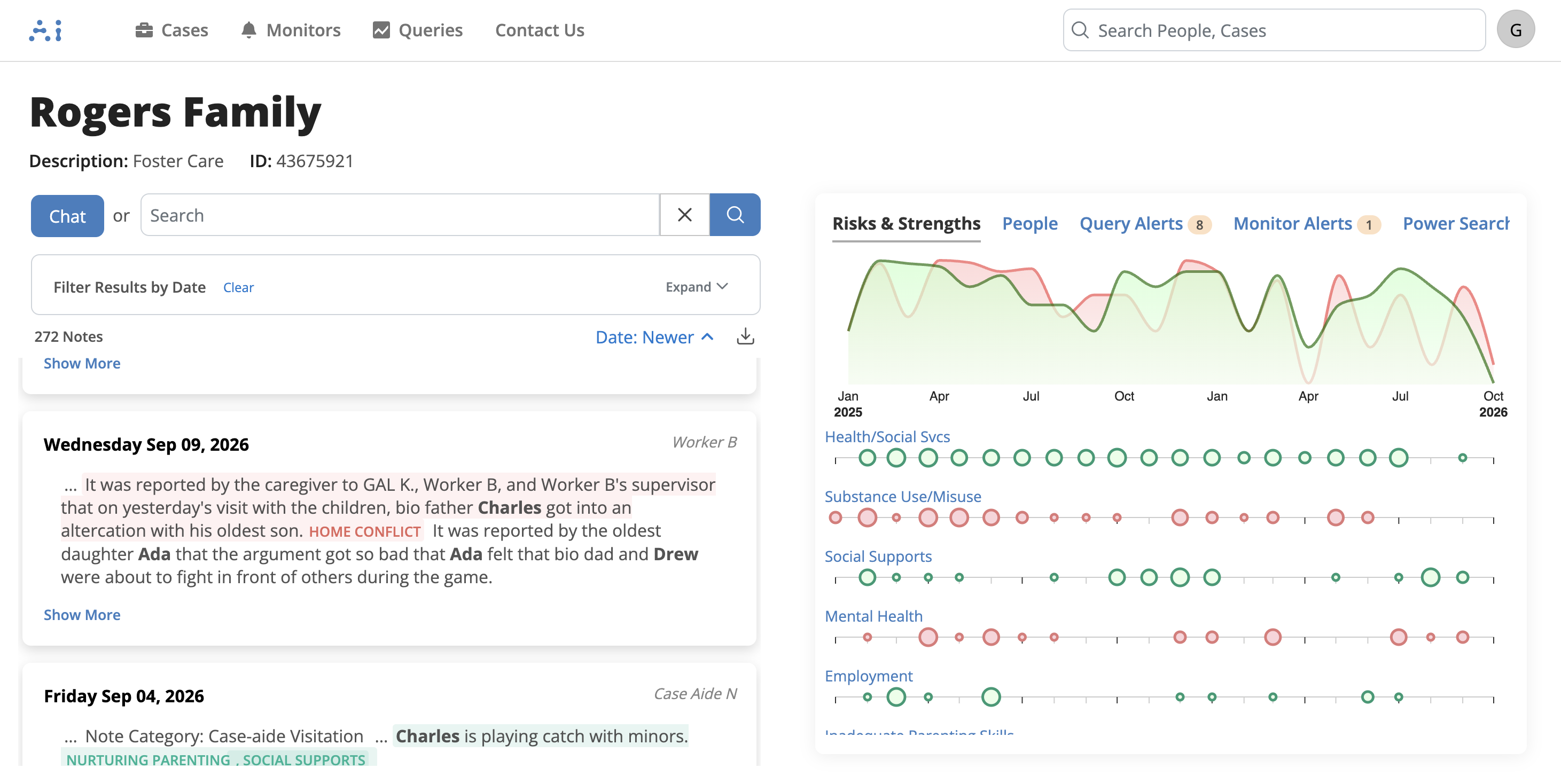
Augintel's Natural Language Processing (NLP) technology analyzes case records and alerts workers and supervisors when it identifies references to potential hazards, such as weapons in the home, unsafe pets, or violence in the community. Each alert includes the exact sentences from the record, allowing workers to review the context and determine how best to prepare for a visit.
These topics are common. In 2023 alone, Augintel delivered more than 5,200 safety-related alerts.
The response from workers has been overwhelmingly positive. As one investigator recently shared:
"It is a good heads up. Investigators carry a heavy caseload, and this is important information that can be overlooked. It means a lot that the state found a way to track that information."
This is a practical example of how NLP can support caseworkers in their day-to-day work while helping agencies address an important organizational priority.
Child welfare is experiencing a significant technology transformation. Comprehensive Child Welfare Information System (CCWIS) funding is driving modernization efforts, while guidance from the Administration for Children and Families (ACF) encourages agencies to embrace innovation and build systems that better support practice.
This creates an opportunity to rethink what child welfare technology should accomplish.
Rather than simply adding more structured data fields and administrative requirements, agencies can use emerging technologies like NLP to make better use of the information they already collect. That means surfacing relevant details, supporting worker safety, and giving caseworkers tools that fit the realities of their jobs.
I recently heard an HHS CIO describe their modernization strategy as incorporating NLP rather than continuing to focus primarily on structured data collection, so caseworkers can work the way they are intended to work.
That's the kind of innovative thinking child welfare needs.
At Augintel, we believe technology should do more than help agencies manage information. It should make the work easier, support the people doing it, and help create safer, more effective environments for the professionals serving children and families.


How AI-powered narrative analytics helped Massachusetts' child welfare team find a home that kept four siblings together, and how it’s changing what agencies can see in their case records.




In child welfare, there’s no substitute for the judgment, experience, and dedication of caseworkers. We believe AI is a support tool – not a replacement – for that expertise. Our AI uses natural language processing to analyze case notes, identify patterns, and surface warning signs. All to help caseworkers better serve children and families.
© 2026 Augmented Intelligence Technologies, Inc.